
Inflammatory Bowel Disease
Hyperbaric oxygen therapy is shown to be a safe adjunct therapy for Inflammatory bowel diseases (IBD). IBD encompass chronic inflammatory conditions, including ulcerative colitis (UC) and Crohn's disease (CD). UC occurs primarily in the colonic mucosa, whereas CD can involve the entire gastrointestinal tract. Abdominal pain, diarrhoea, and weight loss are the most common clinical symptoms of IBD.
Study: The new insights of hyperbaric oxygen therapy: focus on inflammatory bowel disease
Conclusion: There have been many clinical trials proving the effectiveness of HBOT as an adjunct in the treatment of IBD. A systematic review also confirmed that HBOT is a relatively safe treatment option for patients with IBD. In summary, the mechanisms of HBOT for IBD may include the following (Figure 2):
(1) HBOT can reduce oxidative stress;
(2) HBOT can suppress inflammation by affecting inflammatory cytokines and inflammatory immune cells;
(3) HBOT protects the intestinal epithelial barrier by reducing intestinal damage and promoting stem cell differentiation and enhances blood supply;
(4) HBOT can affect intestinal microorganisms to achieve therapeutic effects.
Figure 1. Effect of hyperbaric oxygen therapy on oxidative stress in the intestine. In the inflammatory state, hypoxia in the intestinal mucosa leads to increased production of ROS and mitochondrial and DNA damage, further exacerbating the inflammatory response. HBOT increases superoxide dismutase and glutathione peroxidase levels, thereby reducing levels of oxidative stress. GSH-Px, Glutathione peroxidase; GSSG-R, glutathione reductase; ROS, reactive oxygen species; SOD, superoxide dismutase.

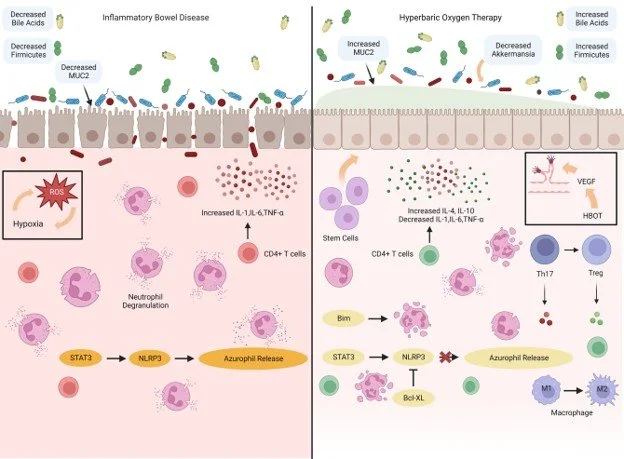
Figure 2. Changes in the pathological profile of IBD before and after HBOT. HBOT modulates intestinal microbial changes, upregulates MUC2 levels, reduces damage to the intestinal epithelial barrier by promoting stem cell differentiation and angiogenesis, and reduces inflammatory responses by reducing neutrophil degranulation, promoting neutrophil apoptosis, Th17 to Treg conversion, and macrophage differentiation from M1 to M2.
Prec Clin Med, Volume 7, Issue 1, March 2024, pbae001, https://doi.org/10.1093/pcmedi/pbae001